

1 – Immersive search
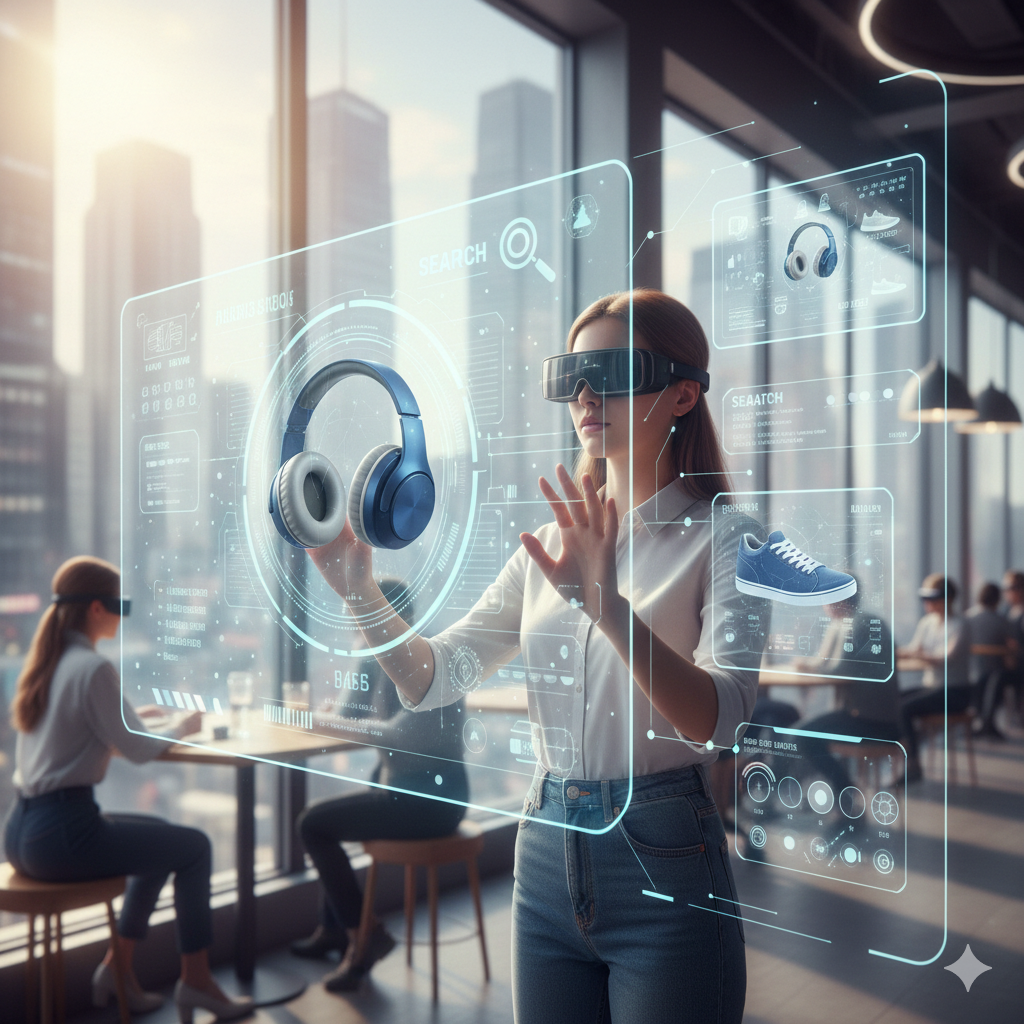
One of the most powerful transformations taking place today is the way people search for and engage with information online. Digital behavior is evolving at an unprecedented pace, and in the coming years, traditional text-based searching alone will no longer be sufficient. From 2026 onwards, users will increasingly rely on voice searches, image-based searches, and real-time, activity-driven queries, making the next digital marketing trend. This shift will compel marketers to rethink SEO strategies, content formats, and user experiences in order to remain visible and relevant in an increasingly immersive digital world.
It is known as the kind of search where people move beyond “typing keywords into a search engine.” This entails speech, visual searches, AR searches, as well as AI-powered searches. Immediation is changing consumer behavior in terms of brand discovery as well as in how marketers go about framing their marketing strategies.
Voice search
Voice search is increasing in popularity as smart assistants and mobile devices become part of everyday life. Users now search using natural and conversational language instead of short keywords. For digital marketers, this means adapting to question-based queries, featured snippets, and local search intent to remain competitive across voice-driven results, as the next digital marketing trend reshapes how users discover content.
One of the most influential aspects of the next digital marketing trend is visual search. Image search and camera search functionalities allow users to take a picture of a product or item and instantly access all related information. This is especially valuable for e-commerce platforms, fashion brands, travel portals, and home décor websites, where visuals strongly influence purchase decisions. As a result, the importance of image optimization in SEO has increased significantly.
2-Augmented reality

AR adds another layer of engagement by way of virtual interaction with products. Further, from virtual try-ons to previews of furniture in real life, AR reduces uncertainty and helps increase buying confidence. Brands leveraging AR experiences see a much better outcome in terms of higher engagement time, session times, and conversion rates.
What matters most with immersive search is how it aligns marketing with real user behavior. It reduces the customer journey, increases engagement, and seamless experiences across devices. As the functionality of immersive features continues to evolve on Google, social media, and e-commerce apps, those brands that fall behind risk rapidly losing visibility.
To achieve this, companies must prioritize content that is conducive to voice searching, visual SEO, interaction, and search engine optimization based on platforms. Immersive search is no longer part of the future but is already influencing how consumers interact with brands
Conclusion,
immersive search, and visual interaction are a significant paradigm shift for digital marketers. They will ensure that brands achieve better connections and are able to differentiate themselves in highly competitive markets and, at the same time, keep them at a cutting-edge position in an increasingly interactive digital environment.